Starting a sales funnel does not require complicated software or a large marketing team. It requires a clear view of how strangers discover a problem, evaluate possible solutions, and decide whether your offer deserves attention. This guide turns that journey into practical steps, so beginners can connect content, channels, follow up, and conversion goals.
Think of the funnel as a sequence of helpful decisions, not a rigid diagram. Each stage answers a customer question: What is happening, which options fit, and why act now? When answers appear in the right order, your message becomes easier to trust, your budget easier to manage, and your next experiment easier to choose.
What Is a Sales Funnel?
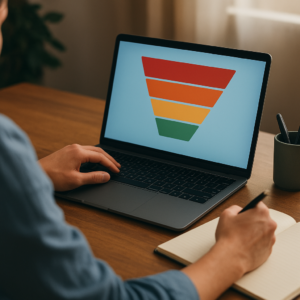
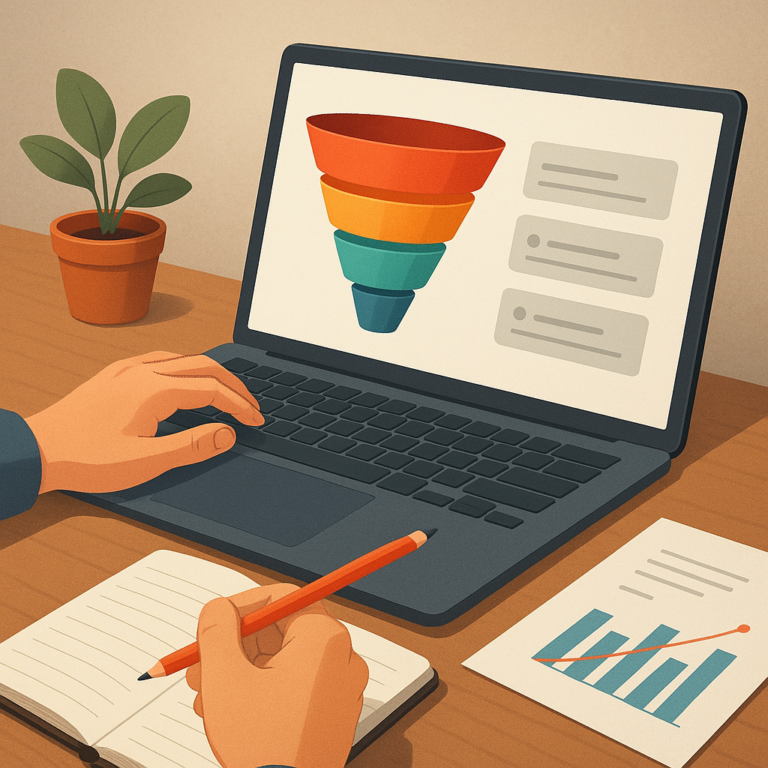
A sales funnel maps the stages a person usually passes through before becoming a customer. Discovery begins when someone notices a need or recognizes a problem. Consideration follows when that person researches alternatives, compares approaches, and seeks evidence. Decision arrives when confidence is high enough to request a proposal, start a trial, or purchase.
Understand the Funnel Stages
Top of Funnel: Earn Qualified Attention
At the top of the funnel, people often seek language, context, or a basic explanation. Publish useful articles, short videos, checklists, and social posts that answer broad questions without forcing an immediate sale. Success here means attracting relevant attention and earning permission to continue the conversation, not collecting every possible visitor.
Middle and Bottom: Build Confidence
In the middle, visitors understand the problem and want practical guidance about possible solutions. Offer comparisons, case studies, webinars, templates, or detailed email lessons. Near the bottom, make action easy with a focused service page, clear pricing context, testimonials, a demonstration, or a consultation. Match the invitation to the person’s readiness.
Match Content With Offers
Content should move people forward instead of filling a calendar without purpose. Pair an introductory article with a useful download, then connect that download to an email sequence that answers common objections. Later, invite engaged readers to compare options or book a conversation. This progression turns attention into a relationship with measurable intent.
An offer must feel proportionate to the trust earned. A first time visitor may accept a checklist, while a qualified subscriber may welcome a calculator or workshop. Someone evaluating providers needs proof, terms, and a direct path to contact. Avoid asking for a major commitment before your content has answered the questions that create confidence.
Connect Acquisition Channels
Treat every acquisition channel as an entrance to the same customer journey. Search can attract people with a problem, social media can create discovery, referrals can transfer trust, and paid campaigns can reach a defined audience quickly. Give each source a suitable landing page and message, then track whether contacts progress beyond the first interaction.
Use consistent promises across channels so a click never feels like a bait and switch. If an advertisement offers a planning guide, the landing page should repeat that benefit and explain the next step. Connect forms to a simple customer relationship system, record the source, and send timely follow up that reflects the original interest.
Build a Small Business Funnel
Start with one audience, one meaningful problem, and one primary offer. For example, a local bookkeeping firm could publish a guide for owners preparing monthly records, capture interested readers with a checklist, and nurture them through practical reminders. The final invitation could be a review call that diagnoses gaps before recommending a service.
Keep the example manageable by assigning a purpose to every asset. The article earns search attention, the checklist captures permission, the emails handle uncertainty, and the call confirms fit. Define one owner for each task and one weekly review point. A modest funnel that receives consistent care will usually outperform an elaborate system nobody maintains.
Measure and Optimize Results
Choose metrics that reveal movement between stages, not vanity alone. Monitor qualified visits, sign up rates, email engagement, booked calls, conversion rates, and revenue by source. Compare results over a useful period, because one busy day can mislead you. Look for drop offs, then investigate the message, offer, page speed, or follow up causing friction.
Common Mistakes to Avoid
Many beginners publish only awareness content, then wonder why inquiries remain weak. Others send the same sales pitch to every visitor or collect leads without a follow up plan. Another mistake is measuring clicks while ignoring quality and revenue. Fix these gaps by defining stage specific goals, documenting handoffs, and reviewing customer questions each week.
Practical Optimization
Improve one bottleneck at a time and document what changed. Test a stronger headline, clearer proof, shorter form, faster page, different email subject, or more relevant call to action. Keep the audience and measurement window stable when possible. After collecting enough responses, retain the improvement, reject it, or design a sharper follow up test.
Start With Confidence
Your first funnel does not need to be perfect; it needs to be understandable and useful. Map the customer questions, create one asset for each stage, connect the next steps, and measure progression toward a clear offer. Start small, listen to responses, and improve steadily. With that discipline, the funnel becomes a system for growth.