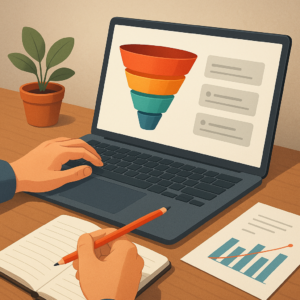

Small businesses can build a sales funnel without software or a process. The essential work is to show people a relevant solution, answer questions, make the next step easy, and follow up consistently. This structure gives owners a clear view of opportunities and helps teams focus on buying interest.
Start by defining a narrow audience and the problem your business solves best. Connect each funnel stage to one customer question, one action, and one measurable signal. This discipline prevents scattered marketing, keeps the team aligned, and makes the process practical during a busy week.
Understand the Funnel Stages
A funnel is a sequence of decisions, not a list of advertising channels. Attraction earns attention from buyers, consideration develops trust, and decision turns interest into a purchase conversation. Giving each phase a purpose helps a small team choose messages and avoid asking for a sale too early.
Attract the Right Audience
Attraction should focus on people who resemble your customers, rather than chasing the largest audience. Publish answers to recurring questions, explain costly problems, and use language reflecting daily experience. Specific topics attract more attention because readers recognize their situation and understand why your expertise matters.
Build Trust During Consideration
During consideration, prospects need evidence that your approach fits their circumstances. Offer guides, comparisons, demonstrations, or customer examples that answer likely objections. Avoid presenting every feature at once; connect each capability to an outcome. Trust grows when information is honest, specific, and easy to apply.
At the decision stage, make the offer easy to understand and accept. State the result, investment, timing, deliverables, and next action without vague promises. A proposal or service page reduces hesitation when buyers know whom to contact, what happens next, and when they will receive a response.
Map the Customer Journey
Map the customer journey by recording how people encounter the business, what they do before contacting you, and what gives them confidence to buy. Use conversations, search terms, and lost opportunities as evidence. The map should describe real behavior, not a path invented at work.
Break the journey into questions a buyer can answer at each moment. Someone discovering a problem may need education, while someone comparing providers may need proof and reassurance. A buyer needs fewer explanations and a route to contact. This distinction keeps content from becoming repetitive.
Match Content and Offers to Readiness
Match content and offers to the prospect’s level of readiness. Educational articles, videos, and checklists support attraction. Detailed guides, case examples, and comparisons support consideration. Consultations, trials, estimates, or proposals support decisions. The goal is not to produce everything, but to lead readers toward one next step.
Keep the promise consistent from the message through the conversion request. If a post discusses reducing missed appointments, the guide or consultation should address that concern. Consistency lowers confusion and makes the business appear reliable. Choose one primary action for each asset, remove distractions that weaken response.
Capture Leads and Nurture Interest
Choose capture points that the team can monitor reliably, such as a website form, service page, phone number, messaging app, or social account. The channel is the place where prospects can ask questions and receive an answer. Make the invitation visible and explain what happens after contact.
Nurturing means continuing a conversation until the prospect is ready to decide. Send a reminder, answer the last question, share proof, or suggest a next step based on the person’s stated need. Record the contact and follow up in one place. Consistency matters more than elaborate automation for a small team.
Create a Consistent Follow Up Rhythm
Set a follow up rhythm that reflects the buying cycle and opportunity’s value. A reply should acknowledge the request, clarify the need, and confirm the next action. Messages can add evidence or answer objections without pressure. Pause respectfully when a contact declines, while protecting relationship for the future.
Find and Fix Funnel Bottlenecks
Evaluate the funnel by stage instead of judging sales as an unexplained number. Track how many people arrive, engage, request information, receive an offer, and purchase. These counts show where movement slows. A spreadsheet is enough at first, provided definitions stay stable and contacts are recorded consistently.
If people show interest but few buy, examine the offer, proof, pricing explanation, and conversation. If traffic comes but few visitors become leads, inspect the message and capture form. If leads stop responding, review speed, relevance, and follow up. Compare stages so changes can be tested rather than guessed.
Organize the Minimum Needed to Start
Start with an operating routine that assigns ownership for every opportunity. Review new contacts, overdue replies, offers, and closed outcomes at the same time each week. Keep the process visible through a shared list, and define the next action for every active lead. This prevents opportunities from being forgotten.
Do not wait for a technology stack before improving the funnel. A spreadsheet, calendar reminder, offer document, and dependable response habit can support an initial version. As volume grows, add tools only when they remove a bottleneck. The system should serve the customer journey, not create administration the team cannot sustain.