Choosing between paid and organic traffic is not a universal marketing decision. It depends on your timeline, budget, offer, audience, and ability to publish consistently. Paid campaigns can create immediate visibility and useful tests, while organic work compounds through search, content, referrals, and trust. Start with the constraint that matters most today.
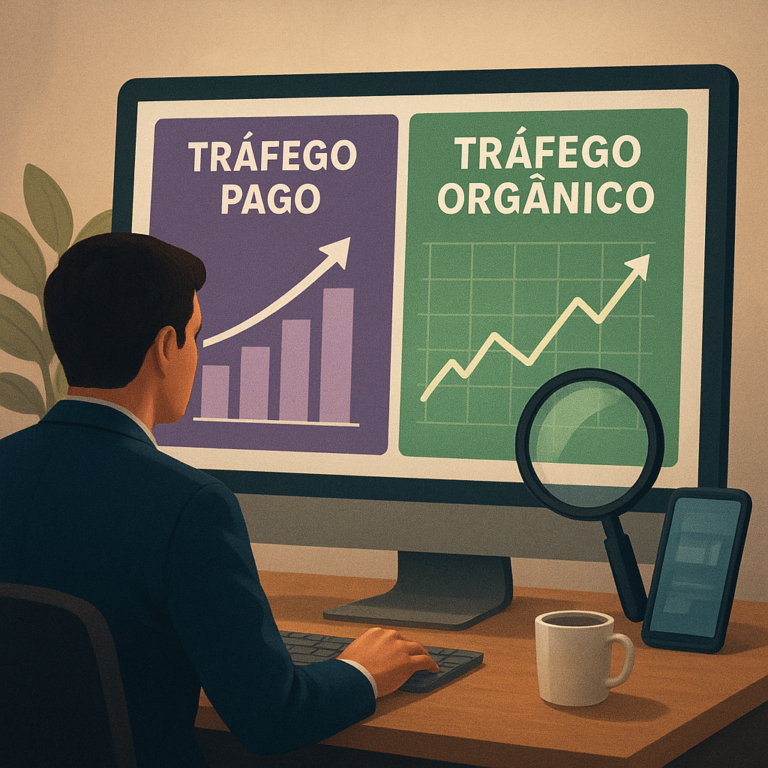
Both channels can support the business, but they solve different problems first. Organic traffic builds discoverability through assets that remain useful after publication, although results often arrive slowly. Paid traffic buys controlled exposure and faster feedback, yet every visit has an ongoing cost. Comparing time, control, risk, and learning speed makes the first choice clearer.
Understand the Two Traffic Models
Organic traffic comes from search engines, helpful articles, social sharing, email referrals, or visits generated by reputation. You do not pay for each click, but organic visibility still requires investment in research, writing, technical improvements, distribution, and patience. Strong pages can continue attracting visitors months later, creating a foundation that becomes more valuable over time.
Paid traffic uses platforms such as Google Ads or social advertising to place a message before an audience. You choose a budget, targeting method, offer, and bidding approach, then measure impressions, clicks, leads, or sales. This control can shorten the path from idea to evidence, but performance depends on messaging and a page that converts.
How Speed and Compounding Differ
The main difference is not free versus expensive. Organic work exchanges time and consistency for long term reach, whereas paid work exchanges money for speed and control. Organic results may accumulate, but they are uncertain at first. Paid results appear faster, but stop when funding stops unless the campaign produces durable customers or useful learning.
Compare Advantages and Limitations
Organic is strongest when a company can answer recurring questions, maintain a publishing rhythm, and wait for authority to develop. It supports education, consideration, and trust, especially for complex purchases. Its weakness is delayed feedback: a team may spend weeks creating content before seeing traffic. Without measurement and patience, that delay can feel like failure.
Paid traffic is useful when an offer is clear, a conversion page is functional, and the business needs evidence quickly. Campaigns reveal which audiences respond, which messages earn attention, and where visitors abandon the journey. However, media costs continue regardless of results. Weak positioning, poor creative, or careless targeting can turn rapid testing into waste.
Match the Channel to Your Constraint
The better channel depends on the constraint you cannot change. If money is scarce but expertise and time are available, organic may deserve priority. If time is scarce but a validated offer can support spending, paid may lead. If neither channel has a foundation, begin with experiments and avoid promising scale before conversion evidence exists.
Use a Scenario Comparison
Use a scenario comparison before choosing a channel. A local service seeking calls within two weeks may favor paid search, while a consultancy with a long sales cycle may prioritize educational content. An online store with proven products can use paid campaigns for demand and organic pages for discovery. Decision should follow the business outcome.
| Scenario | First focus | Reason |
|---|---|---|
| Urgent local demand | Paid search | Captures immediate intent |
| Limited budget | Organic content | Builds owned visibility |
| Validated offer | Paid testing | Accelerates learning |
| Complex purchase | Organic education | Develops buyer trust |
Choose by Business Profile
A local business that needs appointments quickly should test paid search around location, service, and urgency. Tight geographic targeting helps control waste, while call tracking or form tracking shows whether visits become opportunities. Organic profiles and service pages still matter because they reinforce credibility and support discovery after the first campaign learns what customers seek.
A B2B company selling a complex solution may begin with organic education because prospects need context before requesting a conversation. Detailed guides, comparison pages, and proof from clients can reduce uncertainty. Paid campaigns can retarget engaged readers or test promises, but the content foundation should explain the problem before advertising asks strangers to act.
Check Readiness Before Spending
Before spending heavily, confirm that the destination page states one clear promise, loads quickly, works on mobile devices, and offers an obvious next step. Set a baseline for conversion rate, cost per lead, or qualified inquiry. Without these basics, paid data becomes difficult to interpret, and organic traffic may expose the message or experience problems.
Combine Both Without Losing Focus
Combining channels does not mean doubling tasks or funding two complete strategies at once. Let one channel carry the primary objective and use the other to strengthen learning. For example, paid search can test headlines and audience language, while insights guide organic pages. This sequence keeps effort focused and turns experiments into reusable marketing assets.
Share evidence between the channels, but keep their jobs distinct. Paid reports can reveal search terms, objections, creative hooks, and audience segments worth exploring organically. Organic content can reveal questions and language that deserve targeted promotion. Review both channels against the same business metric, then shift resources only when the evidence supports a clear improvement.
Make Your Decision Today
To decide today, write down the result you need, deadline, budget, and proof you have. Choose paid first for urgent demand or rapid validation; choose organic first for visibility and education. If uncertainty remains, run a constrained test instead of debating in theory. Define success before launching, then add another channel when evidence supports it.